Production processes

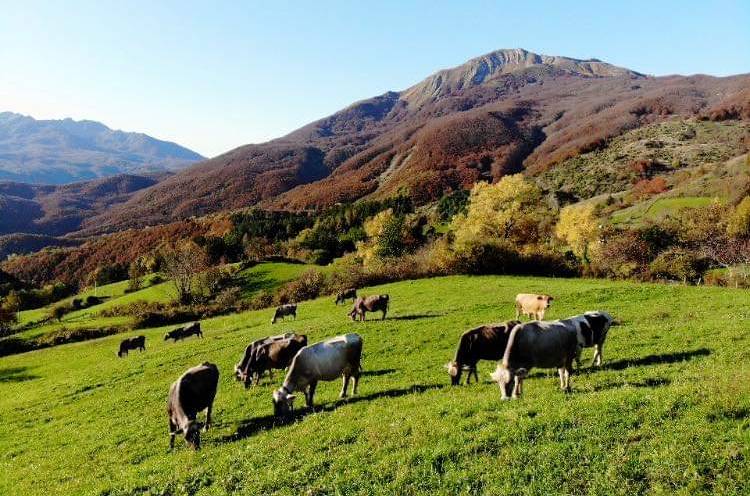
Our Cows

They are exclusively brown mountain cows left to graze freely, fed only with natural forage, in order to then obtain a totally natural milk suitable for the production of Parmigiano Reggiano.

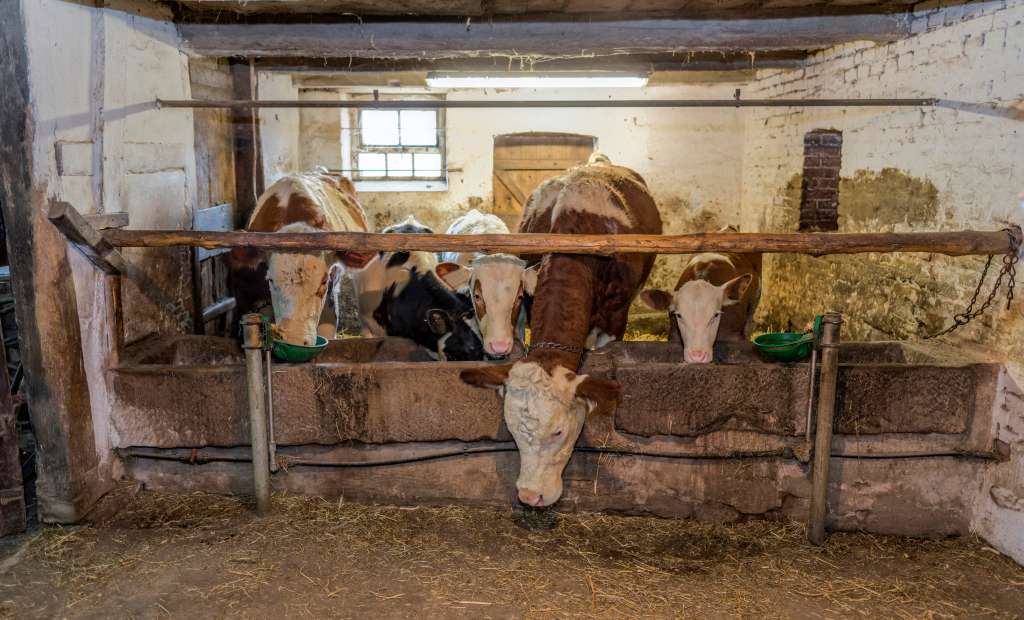
Stall

Parmigiano Reggiano is born from the effort and continuous work commitment of small farmers, unique in the whole world and inimitable.

Graiani cheeses

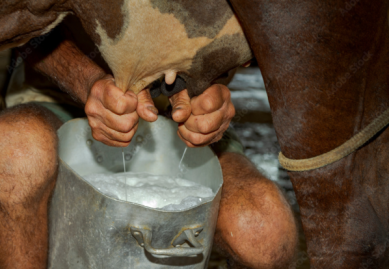
Milking

Once it was made by hand, today thanks to the help of automated equipment, which guarantee maximum yield without waste and maximum hygiene to comply with current regulations.

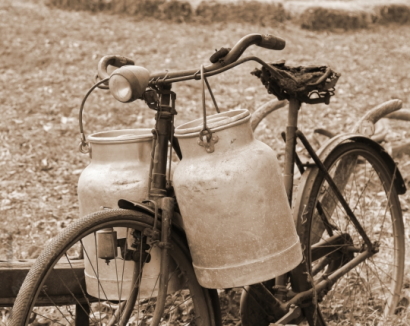
Milk collection

Once with bins transported with carts or with the means available, today with small tanks on trucks to be able to reach even the small manufacturing companies all guaranteed by transport hygiene standards as per current regulations.

Cheese production

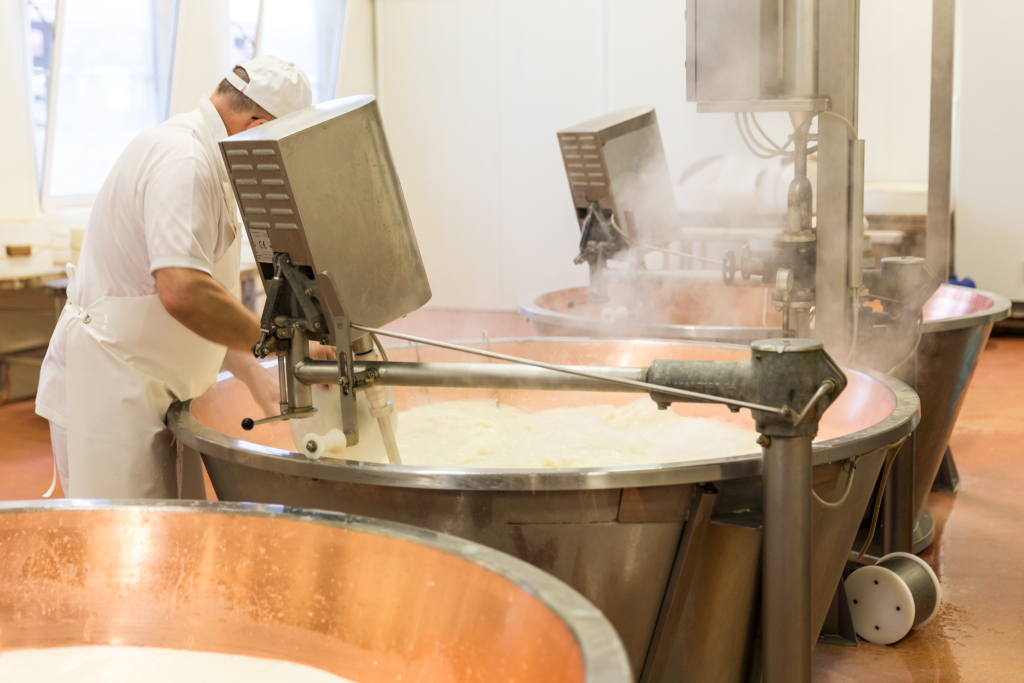
Parmigiano Reggiano is obtained from skimmed milk from the evening milking, poured into surfacing tanks, transferred the following morning into the classic copper boilers in the shape of an inverted bell, with the addition of whole milk from the morning milking.
The milk is enriched with natural rennet and whey to help it coagulate.
This is how the curd is obtained which is fragmented by the Maestro Casaro into small granules with
the manual use of the spino.
Once the operation is complete, the slow heating begins which reaches 55 °C with the descent of the
granules to the bottom of the boiler to form a more substantial mass.
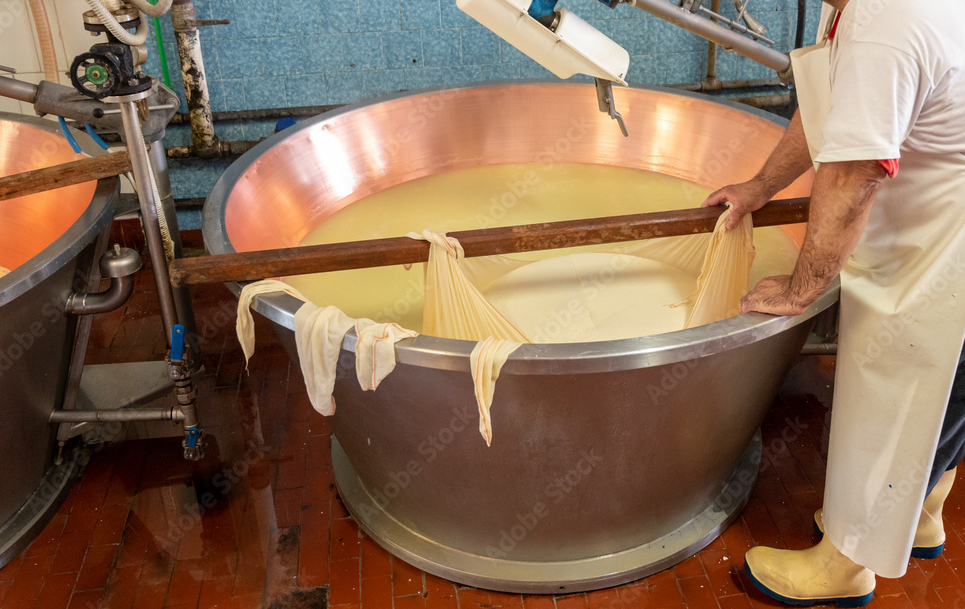
With the help of a shovel, the curd is brought to the surface and collected in the linen cloth;
subsequently, cut into two parts, it is placed in the bands (mold).

Shape processing

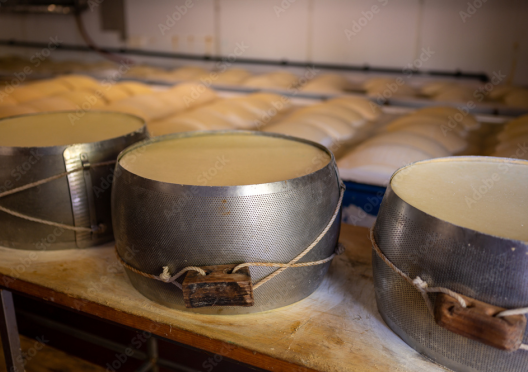
The wheels are transferred for one or two days in a special steel band, tightened with a rope in order to compress it to expel the whey and make them take on the typical "rounded" appearance
of the Parmigiano Reggiano wheel.

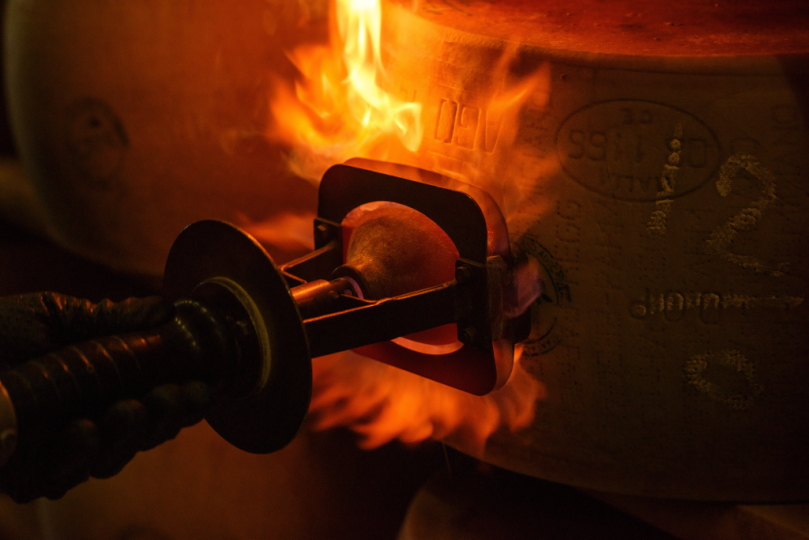
Each form is assigned a casein plaque with the unique identification number and with the special branding band (perimeter) the month and year of production, the serial number that distinguishes the dairy and the unmistakable dotted writing are engraved on the side Parmesan Cheese.

The wheel of Parmigiano Reggiano must weigh no less than 30 kg, up to over 40 kg (on average, the weight is around 40 kg).
Approximately 550 liters of milk are used to produce one wheel of Parmigiano Reggiano with an average of 14 liters for each kilogram of cheese produced.

Salting and maturing of the wheels

After about four days inside the metal band, once a certain consistency has been obtained, the
cheeses are ready for salting. For about 20 days they are immersed in brine. Salting takes
place uniformly, by slow absorption.

fter the first production phase, which lasts about a month, Parmigiano Reggianois ready for the seasoning..
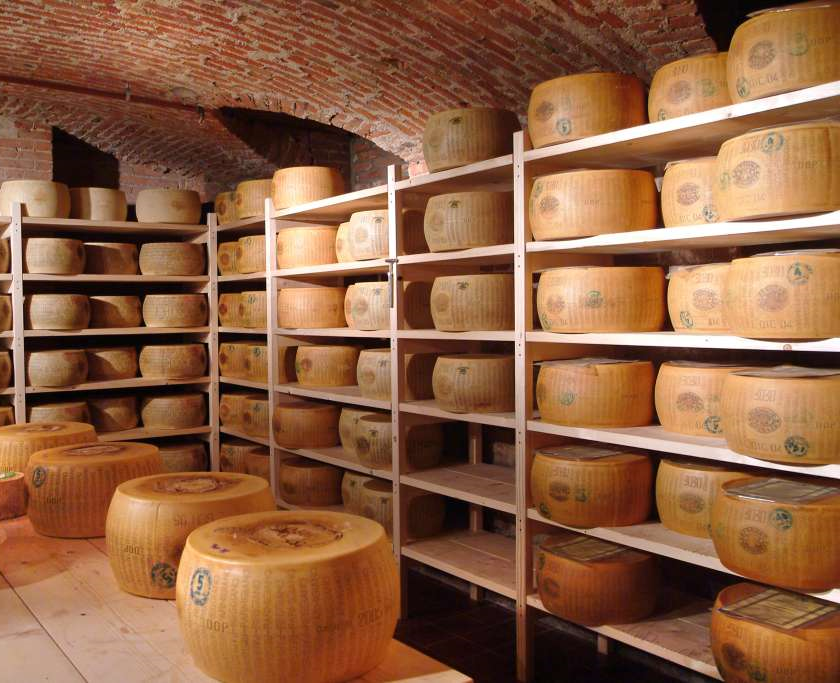
The forms are placed on wooden planks in the maturing warehouse with controlled temperature and humidity, kept constant.
The seasoning lasts at least 12 months. Periodically each form is checked, turned and brushed.
At the end of the 12 months, the wheels are checked with the beating operation
beating to establish which wheels are suitable to become Parmigiano Reggiano, receiving the branding by the Protection Consortium and continuing the seasoning up to 24 months and beyond.
Branding

The branding is carried out in accordance with strict regulations dictated by the Parmigiano Reggiano consortium.

Seasoning

The minimum maturation of each form, in order to be called Parmiggiano Reggiano PDO, is 12 months. The time necessary to allow it, through each season, to acquire the right consistency, the right perfume and, above all, the right flavour. Continuing it can vary from 24 to 30,36,48 up to 60 months.

Quality check

All the cheese, only for the organic one, is x-rayed shape by shape by the body responsible for checking for any non-conformity of the shape. The form is then hammered (beaten) by expert personnel who have been dealing with this phase for years and with the sound of the beating which indicates the conformity of the form and then takes a sample for a taste. This phase is repeated in the various maturing periods.

NUTRITIONAL VALUES
(Per 100g of Parmigiano Reggiano)


Energy value:: kJ 1671, kcal 402.
Fats: 30g, of which saturated fatty acids 19.6g.
Carbohydrates: 0g, of which sugars 0g
Proteins: 32,4g
Salt: 1,6g
Calcium:: 1155 mg
Phosphorus::691 mg
Potassium:: 125 mg
Fe: 0,9 mg
Mg 39 mg
Sodium:: 1529 mg
Graiani

With passion since
1975 in Monchio delle Corti (PR)

Watch the video